Beach · Maspalomas
Playa de Maspalomas
Miles of golden sandy beach, dune landscape directly behind it, and everything you need for a beach day from the promenade to the lighthouse. Here's what to expect at Maspalomas beach.

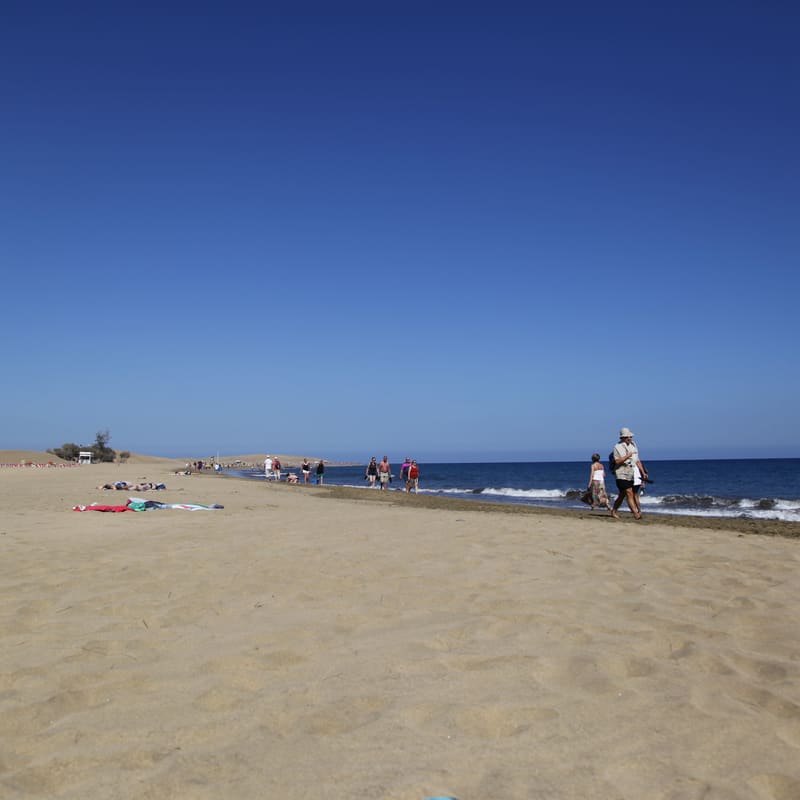
The beach of Maspalomas is one of the most famous beaches in Europe. It's located at the southern tip of Gran Canaria and seamlessly merges with Playa del Inglés at Punta de Maspalomas. Together, the two form a single long stretch of beach about six kilometers long. Behind the sand rise the dunes of Maspalomas, and to the west lie the Charca lagoon and the Faro de Maspalomas lighthouse.
The Beach
The sand is fine and golden yellow, the waves are usually small to normal, the water calm to moderately choppy. The beach is wide, so you'll find a spot even when it's busy. The Maspalomas section has been awarded the Blue Flag, indicating good water quality and facilities. It's free and accessible around the clock, with no entrance fee or gates.
Facilities
- Loungers and umbrellas: You can rent them at several beach sections. The price for 2 loungers and 1 sun umbrella was last €7.50 (as of October 2026). Note: Only card payment is accepted.
- Lifeguards, showers, toilets: Operating depending on season, you'll find the exact times on site. There are also changing cabins.
- Kiosks and beach bars: Along the beach you'll find numbered kiosks for drinks and snacks. At the lighthouse, the Strandapotheke awaits with pop music and sunset.
- Promenade: The Paseo Costa Canaria runs from the beginning of Avenida de Tirajana in Playa del Inglés for several kilometers to San Agustín. Paths along the beach run parallel to it.
- Shade: There's hardly any natural shade, so plan for a sun umbrella and sun protection.
Beach Areas
- Family and swimming area: Especially toward Playa del Inglés, you'll find many loungers, kiosks, and a stone-free entry. The water here is usually good for swimming.
- Nudist area: Along the dunes there's a designated nudist section. It's located between the numbered beach kiosks. Outside the designated zones, nudism is not permitted in the nature reserve - even if it's tempting: Don't leave the path through the dunes, or you risk fines!
- Gay beach: The most famous queer beach section is behind the dunes, at the legendary Kiosk No. 5 (formerly No. 7). It's also a nudist zone. The path there also leads through the dunes, more on this in the article about the dunes of Maspalomas.
- Lighthouse side: At the western end near the Faro de Maspalomas, it's often quieter, with fewer loungers and a direct view of the lighthouse. Here you'll need to walk a bit further. Advantage: You're right near the legendary "Strand-Apo-Theke"
Getting There
- By bus: The "Faro de Maspalomas" stop is the main access point. Several Guaguas Global lines stop there, for example lines 1, 30, and 50. From here it's just a few steps to the beach.
- On foot: From Playa del Inglés and Maspalomas, you can walk comfortably along the beach or via the promenade.
- By car: There are parking spaces near the lighthouse, for example on Avenida del Oasis - however, getting a parking spot here is like a lottery. Therefore, the recommendation is to use the parking garage: Aparcamiento Municipal Maspalomas in the immediate vicinity. In Playa del Inglés, the parking lot at Annexo II offers direct beach access, where a fee is charged.
- By taxi: A ride from the city center in Playa del Ingles costs about €9 (slightly more expensive on Sundays/holidays; as of October 2026).
Practical Tips
- Sun and wind: The sun is strong, expect sunburn even when cloudy. It can get windy.
- Best time: In the morning or late afternoon, when it's quieter and cooler. The sunset at the lighthouse is worth it. For a visit to Kiosk No. 5, it's recommended to be there very early if you want to get loungers and umbrellas (usually only necessary during major events such as Maspalomas Pride in May, Winter Pride in November, or Maspalomas Fetish Week in October).
- Dunes: The dunes behind the beach are a nature reserve, only enter them on marked paths.
- Safety: Pay attention to waves, currents and the lifeguards' flags. Don't leave valuables unattended on the beach, there are pickpockets in busy areas.
- Calima: During Sahara dust the air becomes hazy and dry, more about this in the article on Calima.
Our tip
Start at the Riu Palace through the dunes to the beach, swim in the morning, walk along the water to the lighthouse and end the day at the Strandapotheke. This way you combine dunes, beach and sunset into a perfect day.
Playa de MaspalomasFoto: Tom 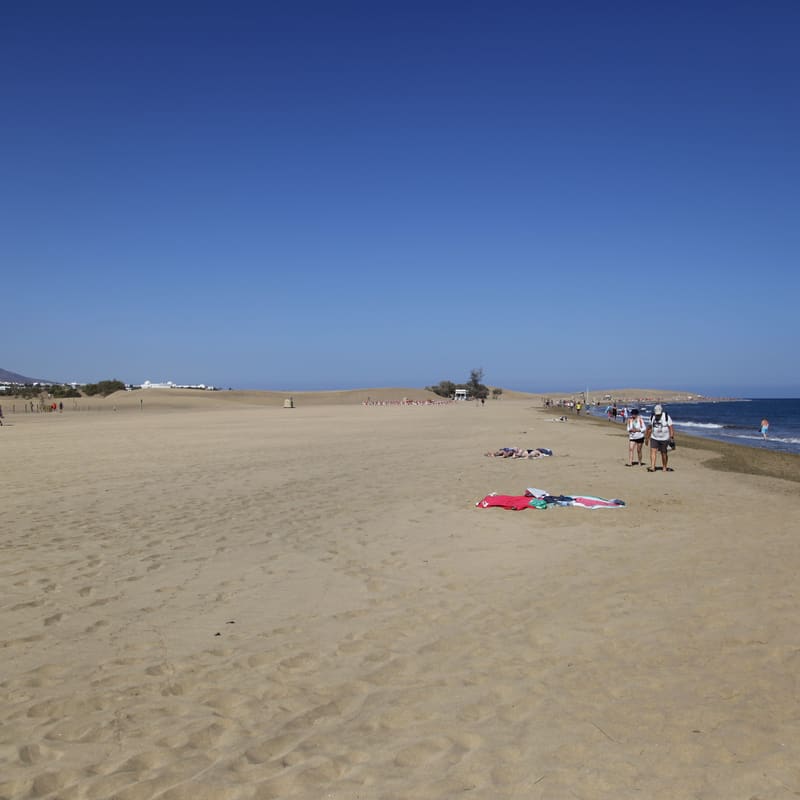
Playa de MaspalomasFoto: Tom 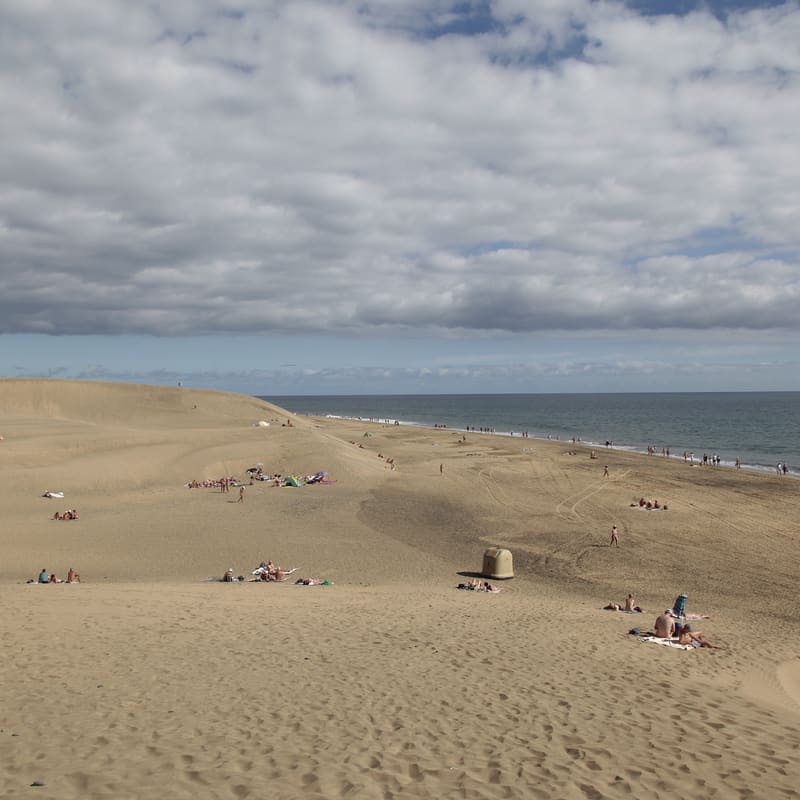
Foto: Tom


Lage
In der Nähe
Strand
Kiosk No. 5 - Gay Strand Maspalomas
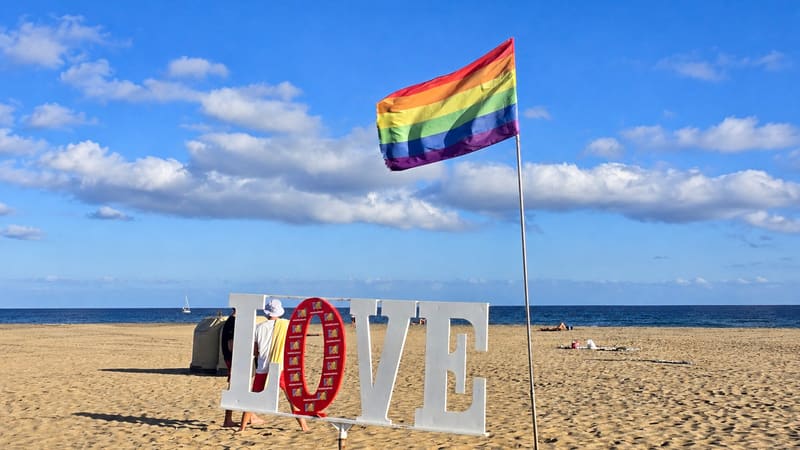
Am Kiosk No. 5 (früher No. 7) hinter den Dünen von Maspalomas liegt der bekannte Gay-Strand der Insel. Entspannte Stimmung, Musik, kühle Getränke und eine Regenbogenflagge machen ihn zum festen Treffpunkt. Wichtig: Zu großen Events früh kommen, sonst gibt es keine Liege.
Natur
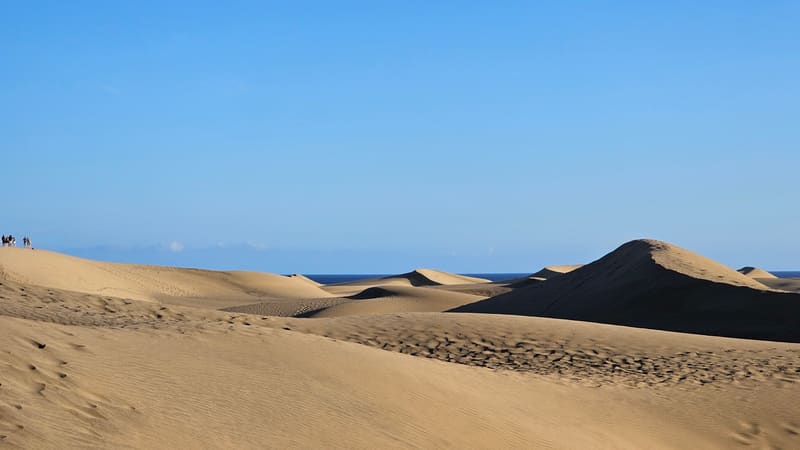
Dünen von Maspalomas
Wüste am Atlantik: Wandern, Staunen und Regeln im Naturschutzgebiet - Goldene Sandwellen, eine Lagune und ein Palmenhain direkt neben den Hotels: Die Dünen von Maspalomas sind das bekannteste Naturwunder der Insel. Sie sind aber ein streng geschütztes Gebiet, das nur auf markierten Wegen betreten werden darf.
Strand
Playa El Veril
Ruhiger Strand mit goldgelbem Sand zwischen Playa del Inglés und San Agustín. Weniger Trubel als in Playa del Inglés, dafür Platz, ruhiges Wasser und Rieseneidechsen an der Promenade. Der Playa El Veril ist eine entspannte Alternative zu den großen Stränden im Süden.
Aussichtspunkt
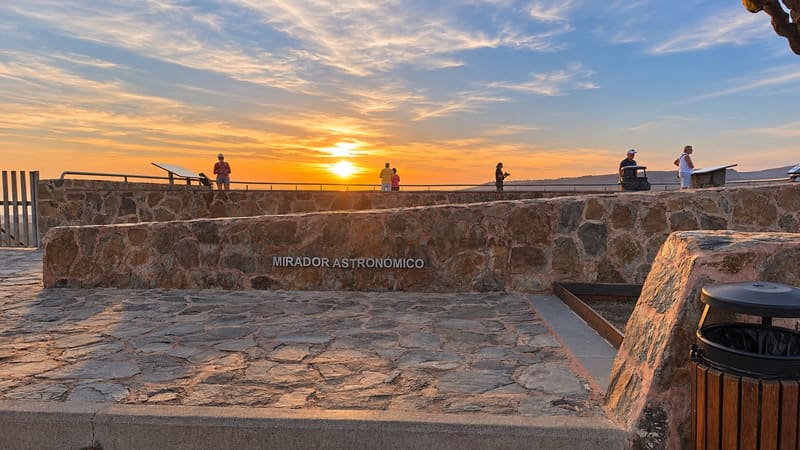
Mirador Astronómico de la Degollada de las Yeguas
Spektakuläres Panorama zwischen Grand Canyon und Sternenhimmel: Auf 842 Metern Höhe bietet der leicht zugängliche Mirador de la Degollada de las Yeguas einen der atemberaubendsten Ausblicke Gran Canarias. Besucher blicken hier tief in die monumentale Fataga-Schlucht und sehen bei klarer Sicht im Süden das Meer und die Dünen von Maspalomas. Idealer Ort zur Sternenbeobachtung!


Common questions
Where is Playa de Maspalomas located?
Playa de Maspalomas is located at the southern tip of Gran Canaria and seamlessly transitions into Playa del Inglés at Punta de Maspalomas. Together, the two beaches form a single long stretch of beach of around six kilometers.
What do sunbeds and parasols cost at Playa de Maspalomas?
At Playa de Maspalomas, 2 sunbeds and 1 parasol cost 7.50 euros (as of October 2026). Only card payment is accepted.
How do I get to Playa de Maspalomas by bus?
The "Faro de Maspalomas" stop is the main point for Playa de Maspalomas. Several Guaguas Global lines stop there, for example lines 1, 30 and 50, and from here it's just a few steps to the beach.
Is there nudism at Playa de Maspalomas?
At Playa de Maspalomas there is a designated nudist section along the dunes between the numbered beach kiosks. Outside the designated zones, nudism is not permitted in the nature reserve.
When is the best time for Playa de Maspalomas?
The best time for Playa de Maspalomas is in the morning or late afternoon, when it's quieter and cooler. The sunset at the lighthouse is particularly worthwhile.